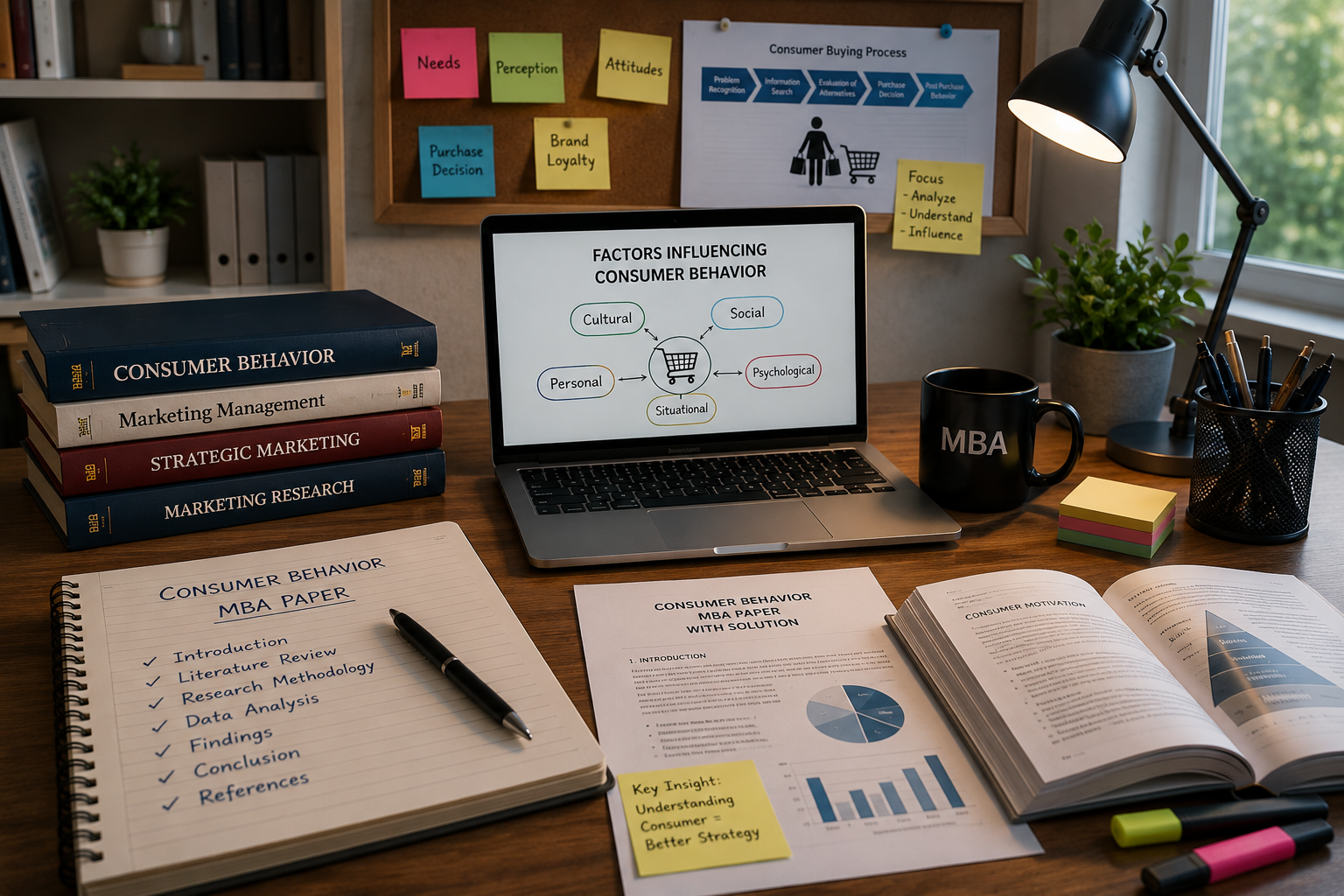
Consumer Behavior MBA Paper with Solution
Why does one customer buy the premium version without hesitation, while another walks away over a small price difference? Consumer behavior tries to answer questions exactly like that. It’s the study of how and why people make buying decisions, and it sits at the heart of nearly every marketing strategy that actually works.
This paper covers the core questions MBA students face on consumer behavior. Each answer is structured, backed by real examples, and written the way you’d want to present it on an exam.
Consumer Behavior MBA Paper with Solution
Question 1: What Is Consumer Behavior?
Consumer behavior is the study of how individuals and groups select, purchase, use, and dispose of products or services. It draws from psychology, sociology, and economics to explain the reasoning behind buying decisions.
Consumer behavior typically covers:
- The decision-making process buyers go through
- Psychological factors influencing choice
- Social and cultural influences on purchasing
- Post-purchase behavior and satisfaction
Understanding consumer behavior helps businesses design better products, price them appropriately, and market them in ways that actually resonate. Without it, marketing becomes guesswork.
Question 2: Explain the Consumer Decision-Making Process
Most purchases, even small ones, follow a similar mental process. Marketers usually break it into five stages.
Problem recognition starts it off. The consumer realizes they need or want something, whether that’s running out of coffee or noticing an old phone feels slow.
Information search comes next. The consumer looks for options, through online reviews, friends’ recommendations, or advertising.
Evaluation of alternatives follows. The consumer compares choices based on price, features, brand reputation, or personal values.
Purchase decision is where the actual buying happens, though last-minute factors like a discount or stock availability can still shift the outcome.
Post-purchase behavior happens after the sale. Satisfaction, regret, or loyalty all form here, shaping whether the customer returns.
A smartphone purchase illustrates this well. A cracked screen triggers the need. Reviews and store visits follow. Then comes comparing models. Then the purchase itself. And finally, how the phone performs shapes whether that person buys the same brand again.
Question 3: Discuss the Psychological Factors Influencing Consumer Behavior
Buying decisions rarely come down to logic alone. Psychology plays a major role.
Motivation drives why a consumer wants something in the first place, often tied to underlying needs like comfort, status, or security.
Perception shapes how a consumer interprets marketing messages, product quality, and even price. Two people can see the same ad and walk away with completely different impressions.
Learning happens through past experience. A positive experience with a brand builds trust that influences future purchases.
Attitudes and beliefs — formed over time through experience, culture, and social influence — strongly shape which brands a consumer even considers in the first place.
Apple has built much of its brand around perception and status. Many customers pay a premium not just for functionality, but for how owning the product makes them feel.
Question 4: What Are the Social and Cultural Factors Affecting Consumer Behavior?
Consumers don’t make decisions in isolation. Their social world shapes what they buy.
Reference groups — friends, family, coworkers — influence preferences, sometimes without the consumer even realizing it.
Social class affects spending patterns and brand preferences, since disposable income and lifestyle expectations vary significantly across income groups.
Culture shapes fundamental values, traditions, and what’s considered acceptable or desirable, often in ways deeply embedded from childhood.
Family remains one of the strongest influences, especially for major purchases like homes, cars, or education.
A useful example: luxury brands often perform differently across cultures, since attitudes toward visible wealth and status differ significantly from one region to another.
Question 4B: What Is Market Segmentation Based on Consumer Behavior?
Businesses rarely market to everyone the same way. They segment consumers into groups first.
Demographic segmentation groups consumers by age, income, gender, or education. It’s simple to apply, though it doesn’t always predict actual buying behavior well.
Psychographic segmentation groups consumers by lifestyle, values, and interests. It often predicts behavior more accurately than demographics alone.
Behavioral segmentation groups consumers by actual purchase patterns, like usage rate, brand loyalty, or occasion-based buying.
Geographic segmentation groups consumers by location, since preferences and needs often vary by region or climate.
A sportswear brand might combine several of these. It could target psychographically defined “fitness enthusiasts,” in specific age brackets, who show behavioral signs of frequent repeat purchases. Layering segments this way usually produces sharper, more effective targeting than relying on just one method alone.
Question 5: Explain the Types of Consumer Buying Behavior
Not every purchase involves the same level of thought. Marketers generally categorize buying behavior into four types.
Complex Buying Behavior
Involves high involvement and significant differences between brands, like buying a car or a house. Consumers research extensively before deciding.
Dissonance-Reducing Buying Behavior
Occurs with high involvement but few perceived differences between options, like choosing between similar carpet brands. Consumers often experience post-purchase doubt.
Habitual Buying Behavior
Low involvement, few brand differences. Consumers buy the same toothpaste or salt brand out of habit, without much thought.
Variety-Seeking Buying Behavior
Low involvement, but consumers switch brands frequently just to try something different, common with snacks or personal care products.
Recognizing which category a product falls into helps businesses decide how much marketing effort should go toward education versus habit reinforcement.
Question 6: What Is the Role of Perception in Consumer Behavior?
Perception is how consumers interpret and make sense of information they receive. It’s rarely objective.
Key concepts include:
- Selective attention — consumers notice only a fraction of the marketing messages they’re exposed to daily
- Selective distortion — consumers interpret information in ways that align with existing beliefs
- Selective retention — consumers remember information that supports what they already think
This is why repetitive, consistent branding matters so much. A single ad rarely changes perception. Consistent messaging over time gradually builds the impression a brand wants consumers to hold. Think Insights’ guide to selective perception in marketing covers these filtering effects in more depth.
Question 7: Discuss the Impact of Digital Technology on Consumer Behavior
Technology has reshaped how consumers research, compare, and buy products.
Key shifts include:
- Online reviews now heavily influence purchase decisions, often more than traditional advertising
- Social media shapes trends and creates direct interaction between brands and consumers
- Mobile shopping has made purchasing faster and more convenient than ever
- Personalization through data and algorithms tailors recommendations to individual preferences
This connects directly to concepts explored in our Digital Marketing MBA paper, since understanding consumer behavior online is essential to building effective digital campaigns.
Why Consumer Behavior Matters in MBA Programs
Every business decision, from pricing to packaging, ultimately depends on understanding the customer.
Studying consumer behavior helps students:
- Understand what genuinely drives purchasing decisions
- Build stronger marketing and product strategies
- Learn to segment audiences based on real behavioral patterns
- Prepare for roles across marketing, sales, and product management
- Avoid costly assumptions about what customers supposedly want
A Practical Example: Applying Consumer Behavior Insights
Consider a mid-sized coffee brand noticing declining sales among younger customers. Research reveals something specific. Younger buyers aren’t rejecting the product itself. They’re rejecting the packaging, which feels outdated compared to competitors.
This is a perception problem, not a product problem. The brand redesigns its packaging with cleaner, more modern visuals. It also shifts marketing toward social media, where younger consumers spend more time researching brands before buying.
Sales among the target group improve within two quarters. Nothing about the coffee itself changed. Only the perception did. This is a common pattern in consumer behavior. Sometimes the product is fine. The gap is in how it’s being perceived and communicated.
Common Challenges in Understanding Consumer Behavior
Rapidly Changing Preferences
What consumers want shifts quickly, especially among younger demographics influenced heavily by trends and social media.
Data Overload
Businesses now have access to enormous amounts of consumer data, but turning that data into genuine insight takes real analytical skill.
Cultural Variation
Global brands must account for different cultural attitudes, and a strategy that works in one market can fail in another.
Balancing Personalization and Privacy
Consumers want relevant, personalized experiences, but they’re also increasingly concerned about how their data gets used and shared.
Generational Differences
Gen Z, Millennials, and older generations often respond to completely different marketing approaches. A single campaign rarely resonates equally across all age groups, forcing brands to make real tradeoffs about who to prioritize.
Tips to Write Strong Consumer Behavior MBA Answers
Use Real Brand Examples
Referencing how brands like Apple or Nike apply consumer behavior principles shows applied understanding, not just memorized theory.
Connect Psychology to Business Outcomes
Don’t just describe a psychological concept. Explain how it actually shapes buying decisions and business strategy.
Distinguish Between Buying Behavior Types
Clearly separating complex, habitual, dissonance-reducing, and variety-seeking behavior shows a stronger grasp of the material.
Keep Answers Structured
Consumer behavior questions often involve multiple stages or factors. Clear headings make answers easier to follow and grade well.
FAQs
What is the main focus of consumer behavior as a subject?
It focuses on understanding how and why people make purchasing decisions, drawing from psychology, sociology, and economics.
Why does perception matter so much in marketing?
Because consumers rarely evaluate products objectively. Their perception, shaped by past experience and branding, heavily influences their choices.
What’s the difference between habitual and variety-seeking buying behavior?
Habitual behavior involves sticking with the same brand out of routine, while variety-seeking involves switching brands regularly just to try something new.
How has digital technology changed consumer behavior?
It has made research, comparison, and purchasing faster and more convenient, while also giving consumers access to reviews and social proof that heavily influence decisions.
Is consumer behavior relevant outside of marketing careers?
Yes. Understanding customer motivation benefits product development, sales, and even operations, since nearly every business function ultimately serves the customer.
Final Verdict
Consumer behavior gives MBA students a genuine window into why people buy what they buy. It’s not just theory. It’s the foundation behind pricing, branding, and marketing strategy that actually works. Students who understand this subject walk away with a real advantage, since building products and messages people genuinely respond to starts with understanding how they think.
1 thought on “Consumer Behavior MBA Paper with Solution”